


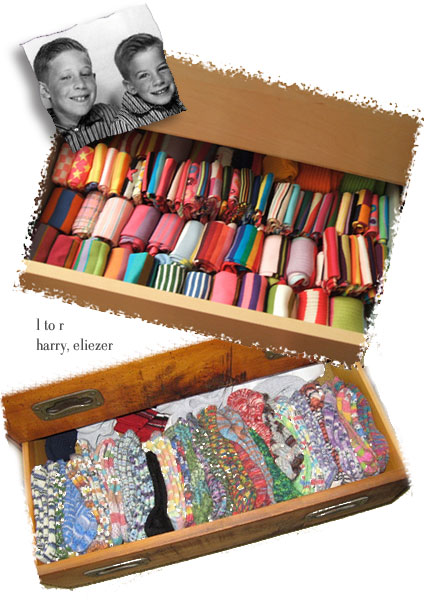


with Harry Sobel & Eliezer Sobel
Norbert Wilner hopes he will feel safe in the house, now that all of his friends are with him. All of the old ones, the important ones, are in the house. Philip and Lynn of course, and Chris and Ellen. And Greg, Becky, Howie, Michelle, and Fred Claymore…
Chris feeds Dave, the dog, and helps Becky bring the food to the low glass table. Lynn is not hungry and eats the Drakes Cake she bought on the trip up. Ellen lights a dinner candle and Philip blows it out. ‘What are you doing? I can’t see!’ Norbert says. “’I’m done eating,’ Philip explains, and Michelle laughs. Howie is playing with Fred’s motorcycle.
Michelle and Ellen are trying to imitate the sound of a red rubber ball. Howie thinks it practically sounds orange, but that doesn’t stop the girls…
Fred Claymore has decided to repair cigarette lighters instead of driving a forklift in the Nabisco plant. He was going to be a trumpet player except that the first chair player in the New York Philharmonic told him he was terrible. Philip and Norbert think he is terrible also… After Fred dropped out of Ithaca College he spent two weeks standing in the New York subways not giving directions to anyone who asked him, and learning to smoke a pipe. Philip jokingly says that Ellen looks a little like Terry Broder.
And so on. I was an undergraduate at Northwestern University at the time, where John Gardner happened to be a visiting professor.
Although I wasn’t in his class, I boldly marched into his office one fall afternoon and presented him with the complete, illustrated manuscript of November Under my Sole. He told me to come back in a week. When I returned, he clearly hadn’t even glanced at it yet, but now took it out in my presence, flipped it open and read the opening sentence, which was: “Noah Wilner could barely see the Palisades through the grey haze, let alone think clearly about the past.”
Gardner then proceeded to spend close to an hour speaking without pause, explaining in great detail exactly why that was possibly the worst opening sentence he had ever encountered in the history of Western Literature. It was amazing that he could find that much to say about it. And it’s not that I no longer remember exactly what he said; it’s that I don’t think I quite heard it the first time, because throughout his diatribe, all I was thinking was, “But that was my brother’s damn sentence, I want you to look at one of my sections.”
Finally, when he came up for air, I managed to direct him to page 46 or so, where my first contribution to the work began. He read a few lines and said, “Yeah, that’s not bad; that’s pretty good,” and I left feeling somewhat mollified, and vowed never to collaborate with my brother again. In an homage to this early work, however, I retained the character names of Norbert and Noah Wilner, and transplanted them to Minyan .

